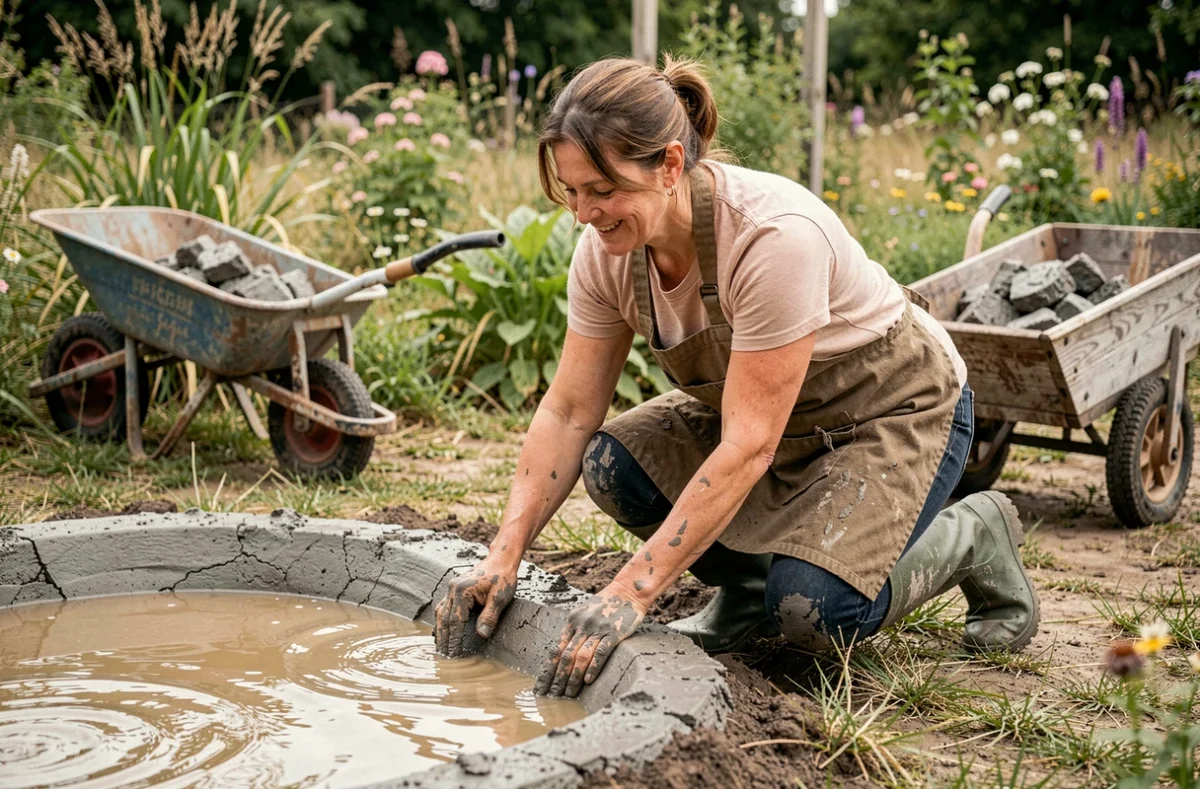
A slightly sunken corner of the garden, heavy soil that sticks to your boots after rain: without even realizing it, you may already have the perfect spot for a pond. The clay in the soil can provide a natural seal, without the need for a plastic liner. But first, you need to understand how clay works and what it takes to keep water in the pond over the long term.
Test the clay in your soil before digging the pond
Before you reach for the shovel, it’s worth checking your soil. Not all clay is the same, and soil that seems clay-rich at the surface may become permeable just a few inches down.
The simplest test is to take a handful of damp soil and roll it between your palms. If you can shape it into a thin sausage without it cracking, the clay content is probably high enough to make the pond watertight. If it breaks apart cleanly, the soil contains too much sand or silt.
This hands-on test gives you an initial indication, but it’s no substitute for a closer look at the site. Dig a hole about a foot deep, fill it with water, and check it the next day. If water is still standing after 24 hours, the soil retains it well. If it has disappeared, clay alone won’t be enough.
In that case, you have two options: add bentonite (a swelling clay sold in granules or powder, which is mixed into the bottom of the pond to seal the pores) or consider an EPDM liner protected against punctures. The right choice depends on your budget and the size of the pond. Bentonite works well for small ponds, while a liner provides more predictable waterproofing over larger areas.
If you’re looking to create a natural clay pond, this testing stage can save you weeks of work on a pond that drains away during the first dry summer.
Shape the pond and create gently sloping banks for wildlife
Have you ever noticed that a bucket of water left in the garden doesn’t attract much wildlife? That’s because wildlife needs accessible banks, not vertical sides. The shape of the pond directly affects which species will make it their home.
Why the slope makes all the difference
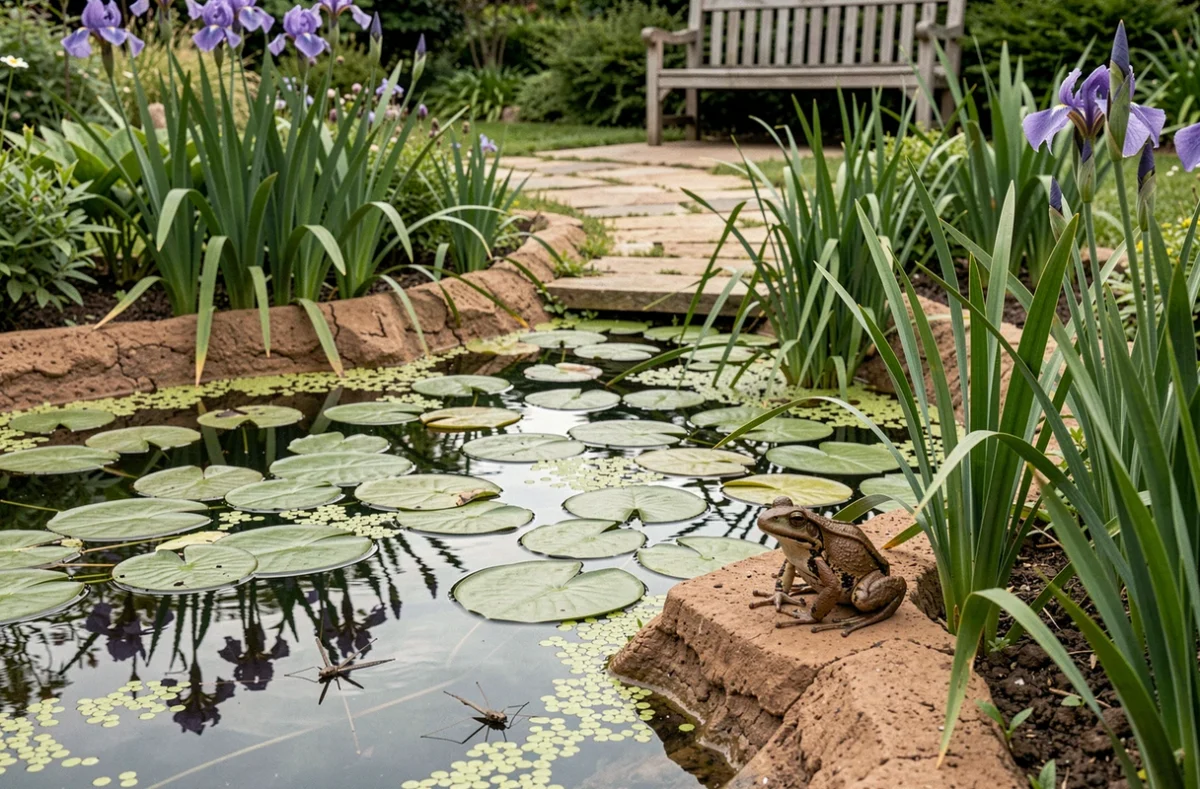
A gently sloping bank (around a one-in-three gradient) makes it easy for amphibians to get out. Dragonfly larvae climb plant stems in shallow water to moult. Hedgehogs and birds can come to the water’s edge to drink without risking drowning.
A pond with steep sides becomes a trap for small mammals and limits plant growth. Make at least one side very gently sloping, ideally facing south so the shallow area warms up quickly in spring.
Vary the depths
A pond’s biodiversity depends on having a range of microhabitats. Three levels are enough:
- A shallow marginal zone covered by a few inches of water, where semi-aquatic plants such as yellow flag irises and water mint can grow.
- An intermediate zone, between eight and twenty inches deep, suited to amphibian spawning and insect larvae.
- A deep zone, about three feet deep, which provides a refuge when the surface freezes in winter or partially dries out in summer.
Varying the depth creates more ecological niches in a relatively small area. Even a pond just a few square metres in size can support remarkable diversity if the bottom isn’t flat.
Compact the clay at the bottom of the pond
Digging isn’t enough. The clay needs to be compacted to become truly impermeable. Without this step, water seeps through the tiny cracks between clods.
Compact the clay in layers. Spread a layer of damp clay (neither dry nor waterlogged) over the bottom and sides, then tamp it down firmly. For a small pond, you can use a hand tamper, the back of a shovel, or even your feet. The aim is to force out the air trapped in the soil.
Repeat the process for at least three successive layers. Smooth each layer thoroughly before adding the next. Together, they form a dense clay “bowl” that holds water much like an unglazed pot.
A common pitfall is planting deep-rooted plants (such as cattails or reeds) directly into the sealing layer. Their rhizomes can pierce the clay and cause leaks. Put these plants in baskets filled with growing medium and place them on the compacted bottom, or keep them in the marginal zone, where water pressure is minimal.
Temporary or permanent pond: a choice that shapes biodiversity
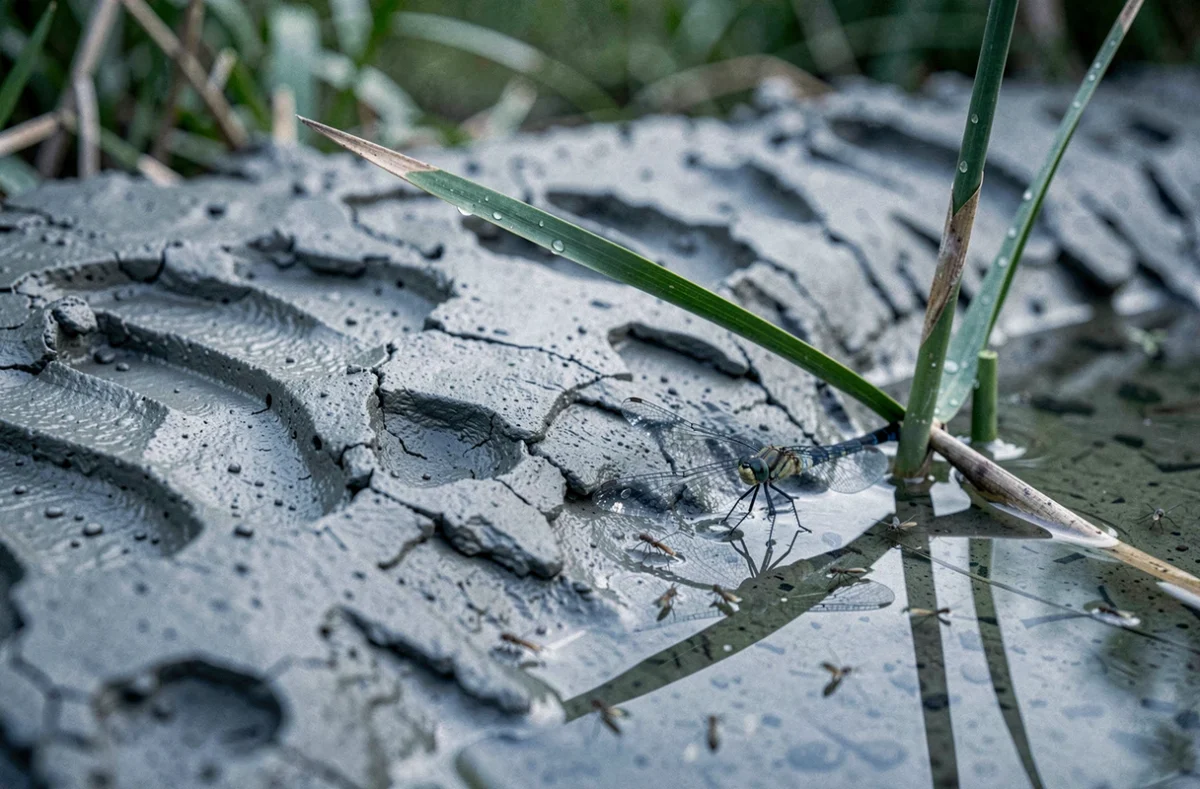
It’s easy to think that a pond that dries out in summer has failed. Not necessarily. Summer drying prevents fish from becoming established, and fish are voracious predators of amphibian and dragonfly larvae.
A temporary pond, filled by autumn and spring rains, supports newts, toads, and some frog species that lay their eggs early in the season, before water levels drop. This natural cycle also helps prevent mosquitoes from multiplying, because their larvae don’t have time to complete their development if the water disappears regularly.
By contrast, a permanent pond attracts different species, including backswimmers, diving beetles, and damselflies. It needs a more regular water supply (runoff, a redirected downspout, or a high water table) and a deep enough bottom to retain water even during dry spells.
Before deciding, observe your garden through a full cycle of seasons. Where does water naturally collect? Where does the soil stay damp the longest? These clues can help you choose the location and the most practical type of pond.
Check local regulations before starting work
Digging a pond in your garden isn’t just a matter of picking up a shovel. The rules depend on the pond’s size, location, and impact on water flows. Local planning regulations may prohibit excavation in certain areas, and local public health regulations often require a minimum distance from homes.
If your property is near a wetland or watercourse, water regulations may also apply, with specific thresholds and procedures. The safest approach is to check with your local council before starting, review the planning documents, and ask the relevant department directly.
A well-planned pond, dug in the right place in clay that has been properly tested and compacted, can become a refuge for dozens of species within just a few seasons. The hardest part isn’t the earthmoving—it’s being patient and letting nature take hold.