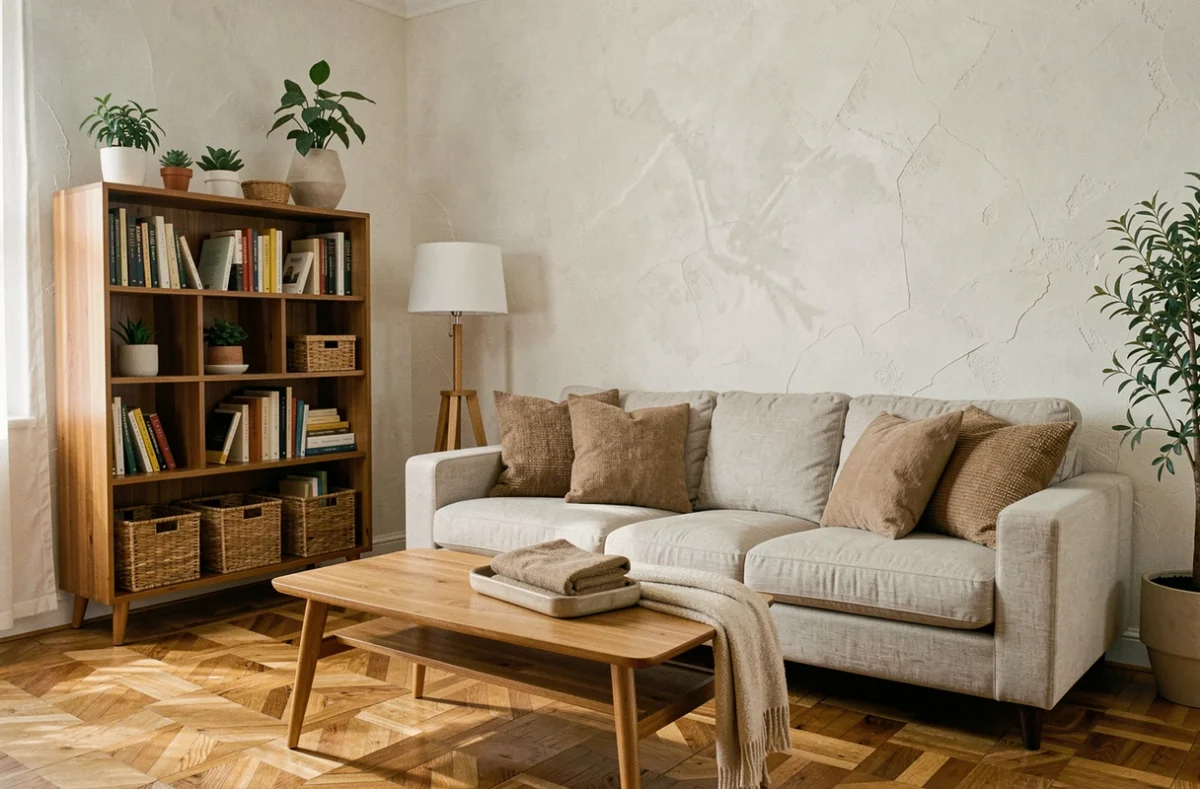
Furnishing a home involves more than choosing furniture or a color palette. The most important decisions concern indoor air quality, summer thermal comfort and how well the home can adapt over time. These three factors are rarely considered together, yet they have a far greater impact on everyday comfort than any decorative accessory.
Indoor air quality: the invisible factor in home design
Interior renovations release volatile organic compounds (VOCs) at every stage. Paints, installation adhesives, particleboard in new furniture and cleaning products all contribute to the total. We recommend scheduling work in stages to avoid saturating the air in your home over a short period.
Mechanical ventilation (MVHR) alone is not enough during renovation work. Ventilating thoroughly and regularly after installing new furniture remains the most effective way to reduce VOC concentrations. Solid wood furniture or products certified for low emissions (A+ rating) help tackle the problem at its source.
Flooring deserves the same attention. A floor glued down with a solvent-based adhesive in a closed room can affect air quality for months. Choosing low-VOC adhesives or a click-lock floor that requires no glue makes a significant difference. To discover Pôle Aménagement Maison, simply explore the different material options and interior design solutions available.
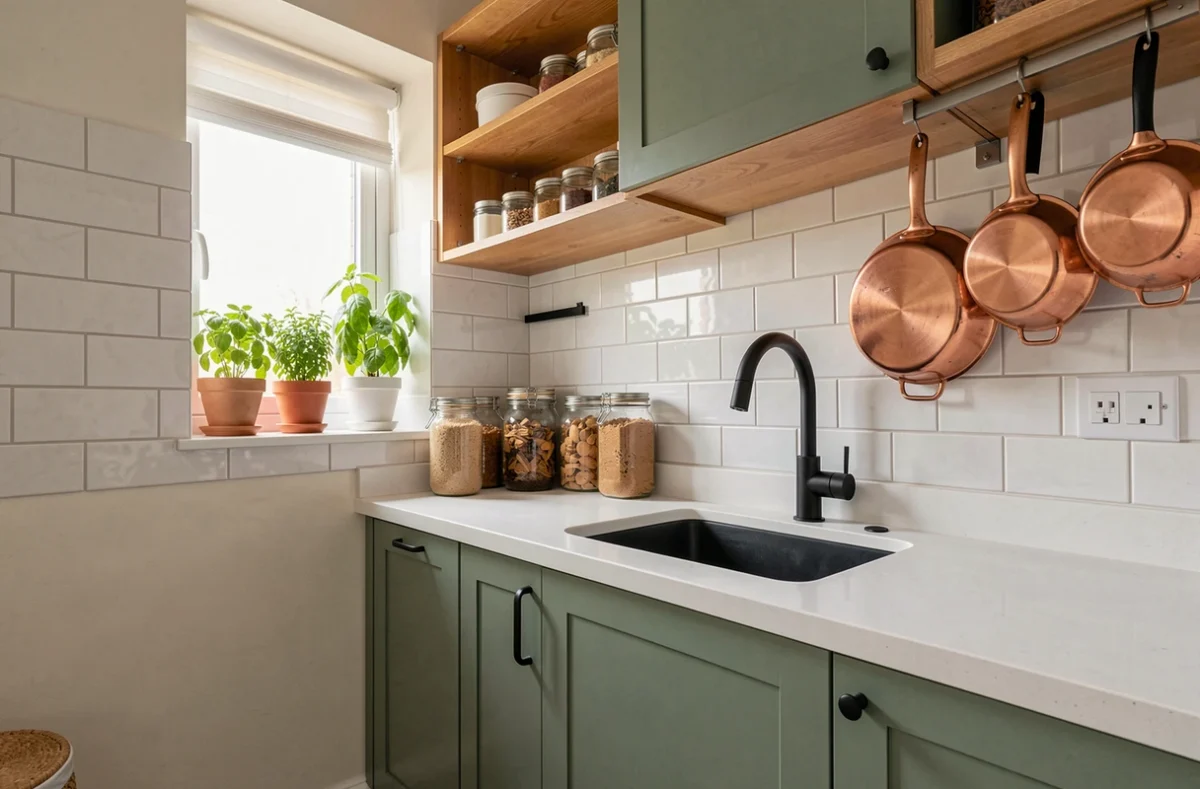
Summer comfort and interior design: plan for the heat without air conditioning
The DPE includes a summer comfort indicator, but it does not affect the home’s overall energy rating. As a result, even well-rated homes can become unbearable in July.
Exterior solar shading is far more effective than interior blinds. Projecting shutters, adjustable external louvers and bioclimatic pergolas block sunlight before it passes through the glazing. Once the heat is inside, it is too late to remove it without active air conditioning.
The building’s thermal mass plays a decisive role. Stone, solid brick and poured concrete walls store the coolness of the night and release it during the day. By contrast, a lightweight timber-frame building without enhanced roof insulation heats up very quickly.
Night-time ventilation and room layout
Designing your home with the sun’s orientation in mind can transform summer comfort. Living areas (the lounge and kitchen) are best placed on the north- or east-facing side. West-facing bedrooms absorb the afternoon heat, which can disrupt sleep.
Cross-ventilation is still the most overlooked no-cost solution. Two openings on opposite sides of the home create a natural airflow far stronger than a single window. When renovating, making sure every room has at least one opening to the outdoors should be a priority before choosing a wall color.
Adapting your home for ageing: design choices to make early
Adapting a home for ageing or reduced mobility involves more than installing a walk-in shower. The most common obstacles are raised door thresholds, slippery floors, stairs without handrails and inadequate lighting in circulation areas.
Subject to income and age requirements, MaPrimeAdapt’ helps fund home adaptation work. The scheme includes support to assess the home’s specific needs before any work begins. Planning these adaptations from the outset avoids costly alterations later.
- Door thresholds: replacing them with flush thresholds makes it easier to get around in a wheelchair or with a walker and reduces the risk of falls
- Hallway and stair lighting: motion sensors paired with indirect LED lighting eliminate dark spots without having to search for a switch
- Flooring: non-slip tiles in the bathroom and kitchen help prevent slips, even with wet feet
- Clearance width: allowing enough space in hallways and doorways makes it easier to accommodate mobility aids such as a wheelchair or walker
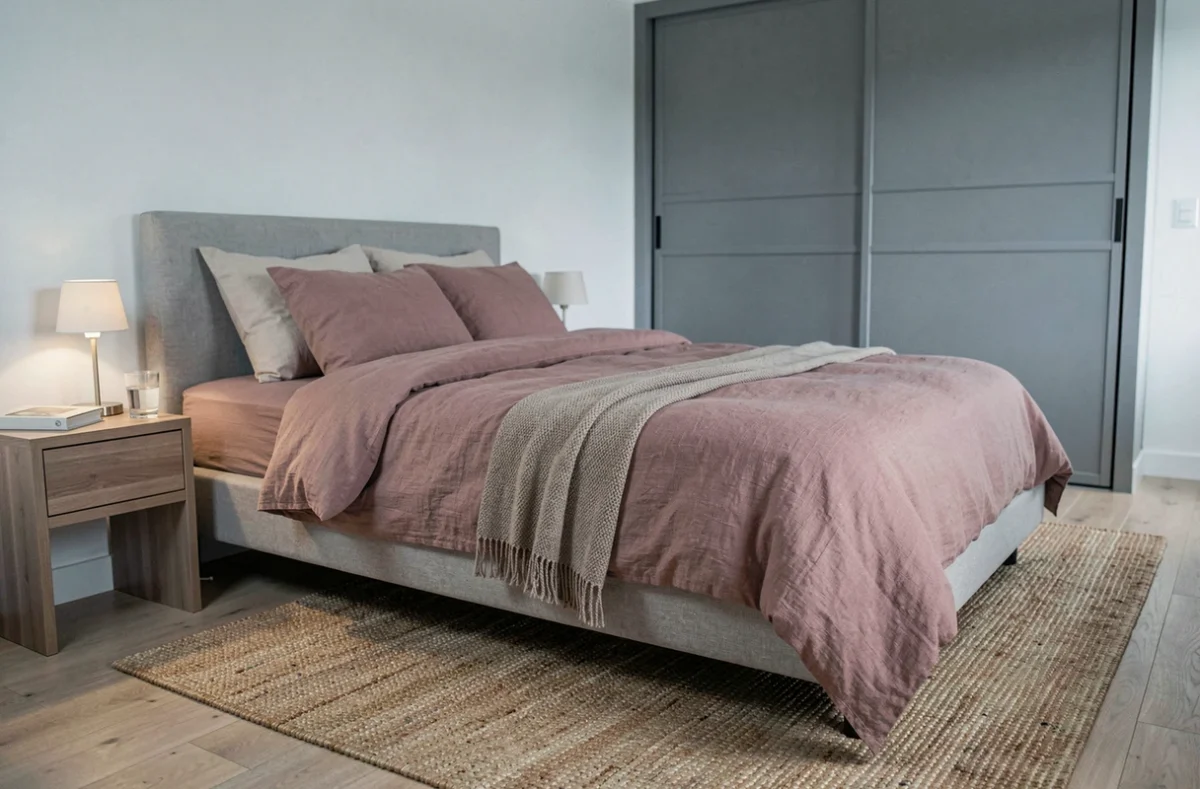
Integrating a home office into your living space without adding walls
According to Insee, in 2025, one in five employees worked remotely on a regular basis, at least one day a week. This makes a dedicated workspace worthwhile, even in a modest-sized home.
The main challenge is not floor space, but creating visual and acoustic separation from the rest of the room. An open bookcase, a slatted screen or a freestanding acoustic panel is enough to define the area without putting up a wall.
Lighting and ergonomics for a home office
The desk should be perpendicular to the window, not facing it. Natural light from the side reduces screen glare and eye strain. Add an adjustable desk lamp with good color rendering to ensure visual comfort during longer work sessions.
The chair is the most worthwhile investment. A chair with adjustable lumbar support and armrests, and a seat height suited to the desk, helps prevent musculoskeletal problems that can develop after a few months of working from home in a poorly set-up space.
- Desk height: your elbow should form a right angle when your forearms rest on the desk
- Screen: the top edge should be at eye level, about an arm’s length away
- Cables: an under-desk cable tray and a secure power strip are all you need to eliminate visual clutter and reduce the risk of tripping
Designing your home with air quality, heat and the way you actually use each room in mind creates a more durable interior than a purely aesthetic layout. Technical choices made early on—low-emission materials, solar shading, flush thresholds and an ergonomic workspace—pay off for years without needing to be redone. Comfort is built into the details you don’t see, not the finishes.