
Currently, airless paint sprayers can have one of two different types of motors: brushed and brushless. Until recently, the most commonly used motor was the brushed type, which operates by having small contact brushes inside the motor that make it work. They cannot be adjusted or modified. However, there are also those that have the advantage of being able to adjust and replace the brushes to achieve the best results. Brushed motors have the advantage of being widely available and relatively inexpensive. They are equipped with most types of airless paint sprayers with piston pumps and diaphragm pumps. Now, brushless motors are becoming increasingly popular in airless paint sprayers. They offer different advantages compared to brushed DC motors, including more torque per watt (increased efficiency), greater reliability, reduced noise, increased durability (no brush and switch wear), elimination of ionizing sparks, and overall reduction of electromagnetic interference. Here is the table of the disadvantages and advantages of these two types of motors:
Brushed DC Motor
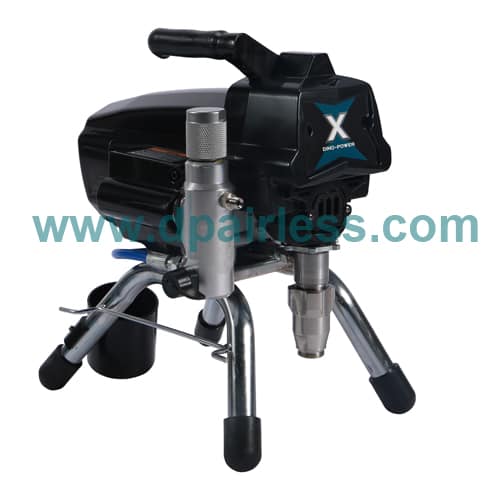
Advantages:
* Two-wire control
* Rebuild a new brush for a longer lifespan
* Low construction cost
* Simple and economical control
* No controller required for fixed speeds
* Operates in extreme environments due to lack of electronics
Disadvantages:
* Periodic maintenance is required
* Speed/torque is moderately flat. At higher speeds, brush friction increases, thus reducing usable torque
* Poor heat dissipation due to the internal structure of the rotor
* Greater rotor inertia limits dynamic characteristics
* Lower speed range due to mechanical limitations of the brushes
* Brush arcing generates noise causing electromagnetic interference (EMI).
Brushless DC Motor
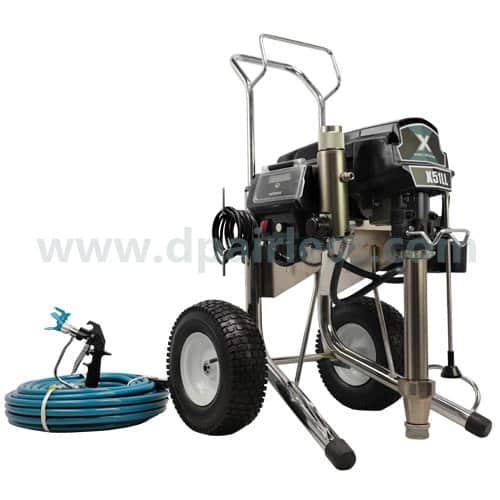
Advantages:
* Electronic commutation based on position sensors vs mechanical switch for brushed
* Less maintenance due to lack of brushes
* Flat speed/torque, allows operation at all speeds with nominal load
* High efficiency, no voltage drop between brushes
* High power-to-weight ratio.
* Small size due to superior thermal characteristics. Why the windings are connected to the housing
illa heat dissipation is better
* Higher speed range – no mechanical limitations imposed by brushes/switch
* Low electrical noise generation (EMI)
Disadvantages:
* Higher construction costs
* Control is complex and expensive
* You need an electronic speed controller (ESC) to keep the motor running, which is sometimes more expensive than the motor.
Tag : separate lawn and gravel