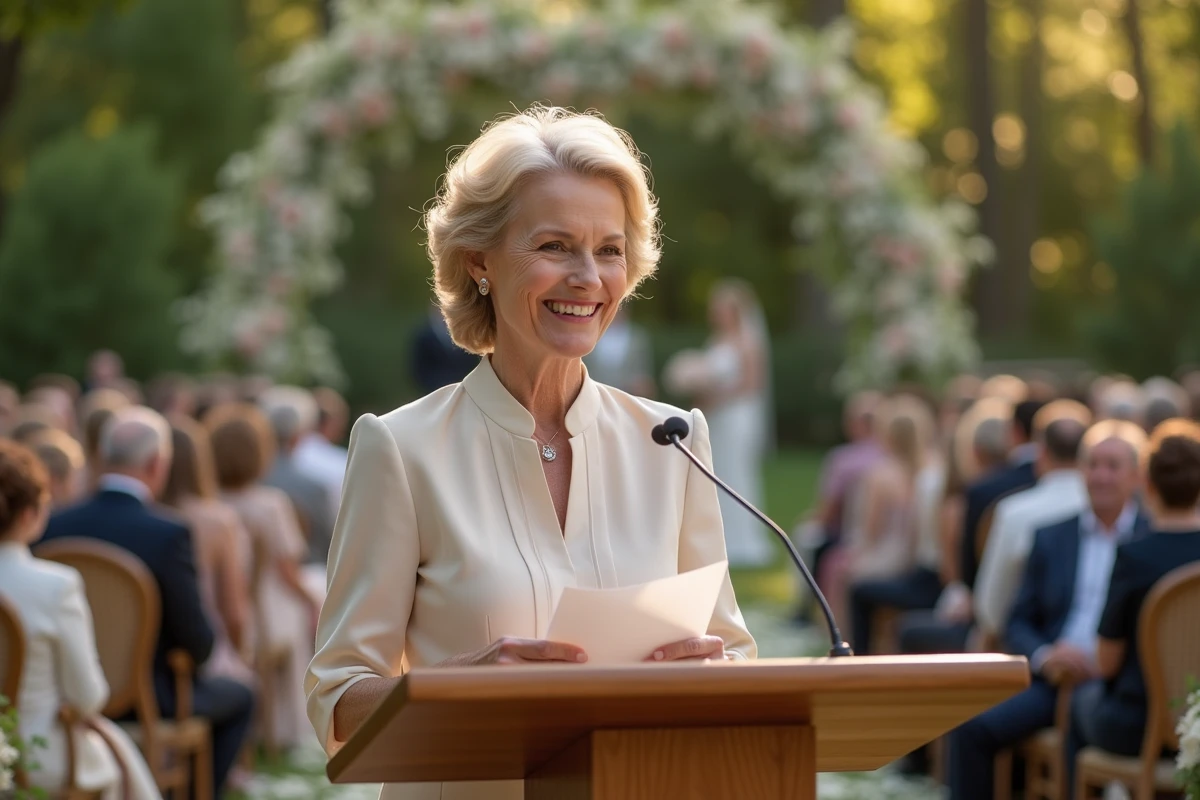
The speech of the groom’s mother during a secular ceremony holds a special place. Unlike the religious ceremony, where the ritual frames each speech, the secular ceremony leaves room for freedom, which complicates the task as much as it liberates it. Secular wedding officiants note a clear trend to limit the duration of speeches from loved ones to maintain a steady pace, especially outdoors.
1. Coordinate the speech duration with the secular officiant

The first concrete step is not writing, but coordination. The secular officiant sets a precise outline and gives duration guidelines to each speaker. Exceeding a few minutes per speech diminishes the guests’ attention, especially in heat or strong winds.
Ask the officiant the time allocated to you, the exact moment of your intervention in the outline, and if other loved ones speak before or after you. This information conditions everything else: text length, tone, and even the number of anecdotes to include.
Several tips for a groom’s mother speech in a secular ceremony emphasize this prior coordination, because a beautiful text delivered at the wrong time or for too long loses all its impact.
2. Write for speaking, not for silent reading

A wedding speech is not a letter. Long sentences, stacked clauses, and literary turns become inaudible as soon as they are spoken in front of an audience. Write short sentences, with a subject, a verb, and an idea.
Reading the text aloud during writing allows you to immediately spot what catches. If you stumble over a word or lose your breath mid-sentence, it means the sentence is too long. Cut it.
3. Mention both newlyweds in the wedding speech
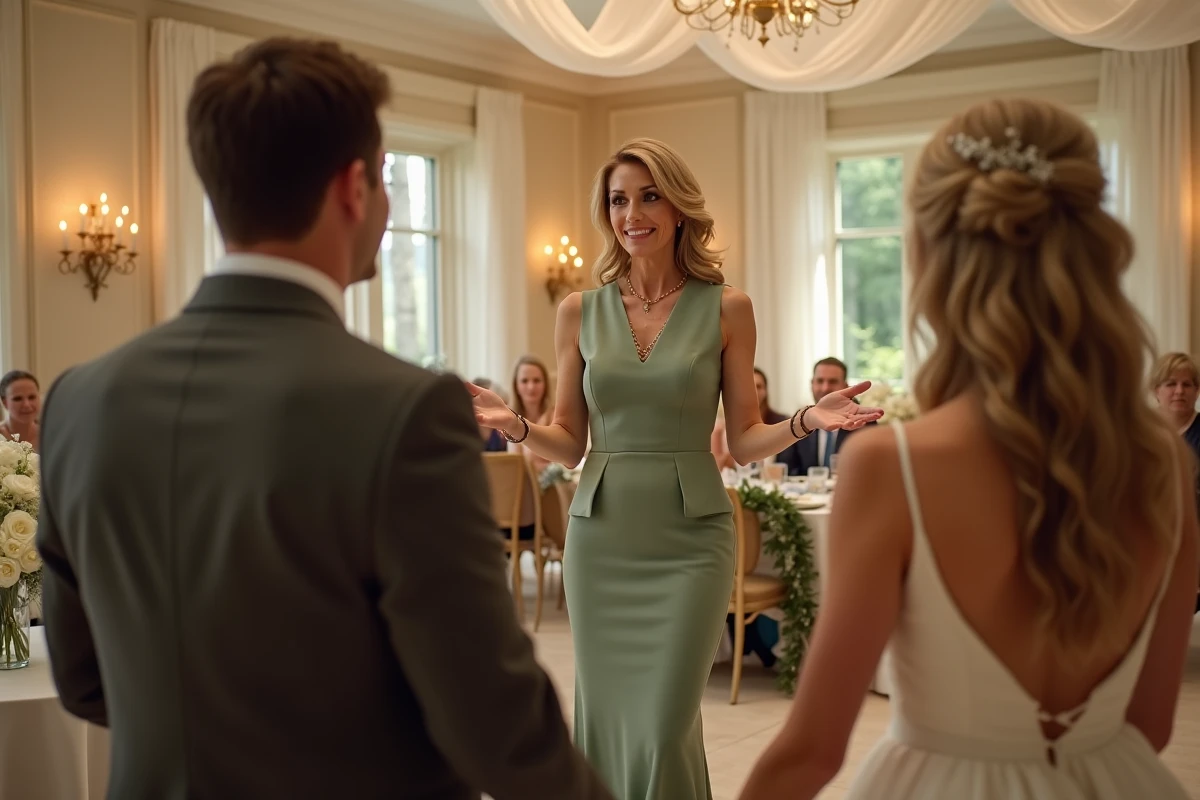
The most common mistake in parents’ speeches: only addressing their own child. This day celebrates a couple. Speaking only about your son while forgetting his partner creates an imbalance that the entire assembly feels.
Include a direct passage addressed to the person joining your family. A memory of your first meeting with them, a character trait that touches you, or simply sincere words of welcome are enough to rebalance the speech.
4. Adapt the text for blended families or complex relationships

Professionals of the secular ceremony observe an increase in situations of blended families or strained relationships between parents and the groom. This context profoundly alters what can be said and how to say it.
Avoid any allusion to family conflicts or ex-spouses consistently ranks among the mistakes to avoid. In case of doubt, have your text reviewed by the officiant or a neutral loved one. The idea is to distribute the speech without creating tension in the assembly.
5. Choose a specific childhood anecdote rather than a general portrait
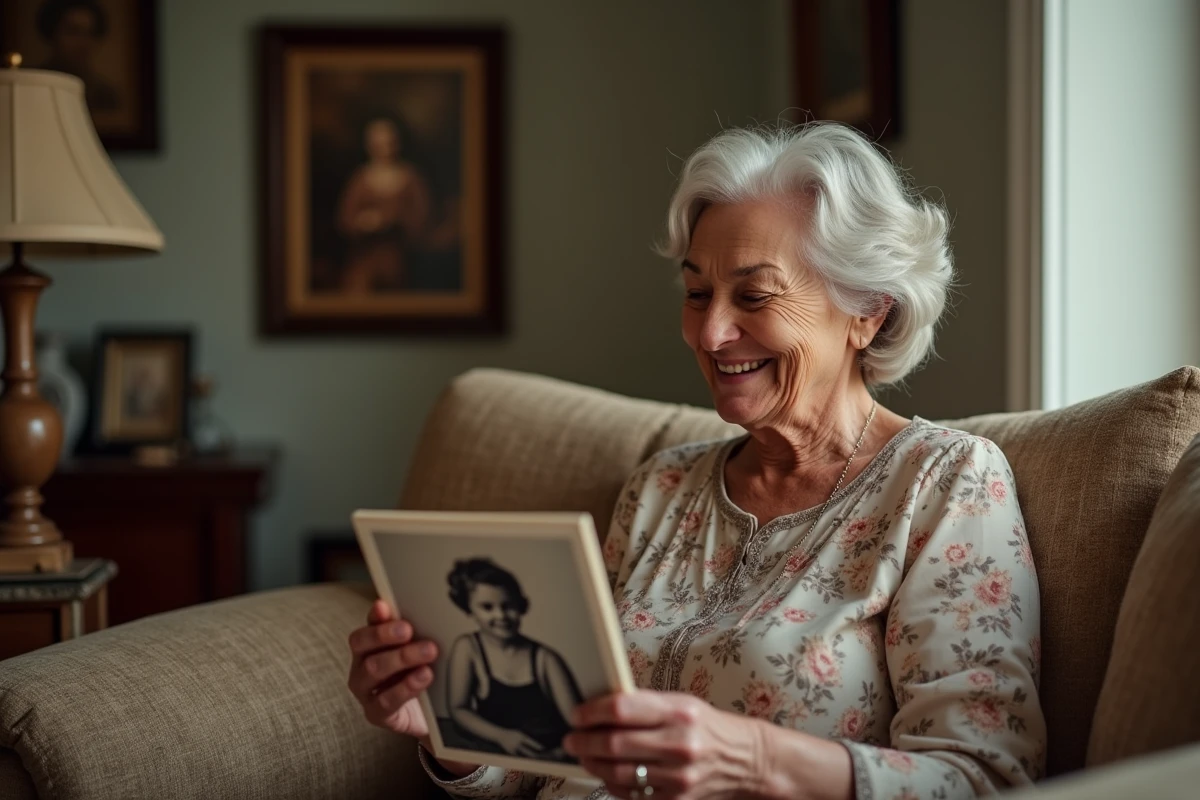
The most memorable speeches are based on a concrete memory, not on a vague description like “you have always been a wonderful child.” A specific moment, a scene with a place, an age, a visual detail anchors your speech in reality.
Choose a single anecdote rather than three briefly touched upon. Develop it enough for the guests to visualize the scene, then connect it to the wedding. This structure (memory, transition, projection) works better than accumulating memories.
6. Find the right tone between emotion and humor in a mother’s speech
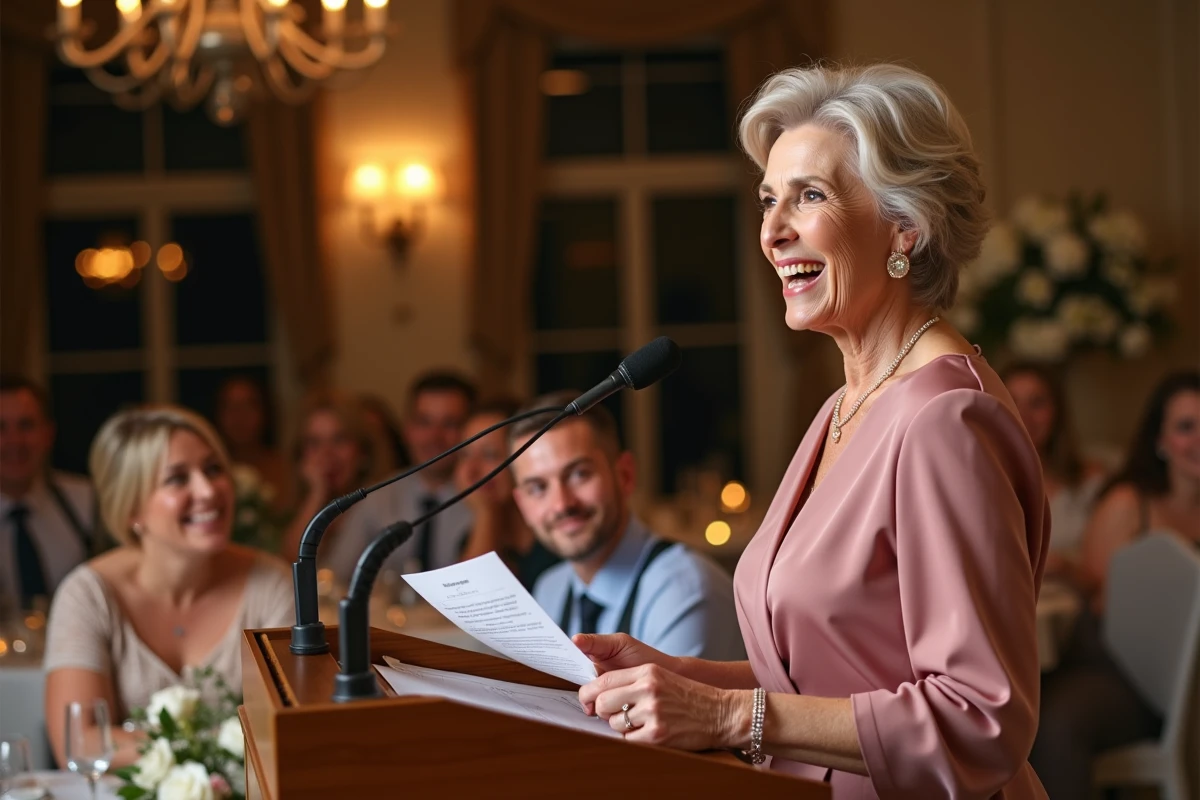
A 100% emotional speech risks becoming heavy. A 100% joke speech may seem detached. Alternating a sincere passage with a light touch maintains attention and better reflects the reality of a mother-son relationship.
Be careful with embarrassing stories: you are addressing guests of all generations. What makes your close friends laugh may make your son uncomfortable in front of his in-laws.
7. Practice the speech aloud at least three times before the big day
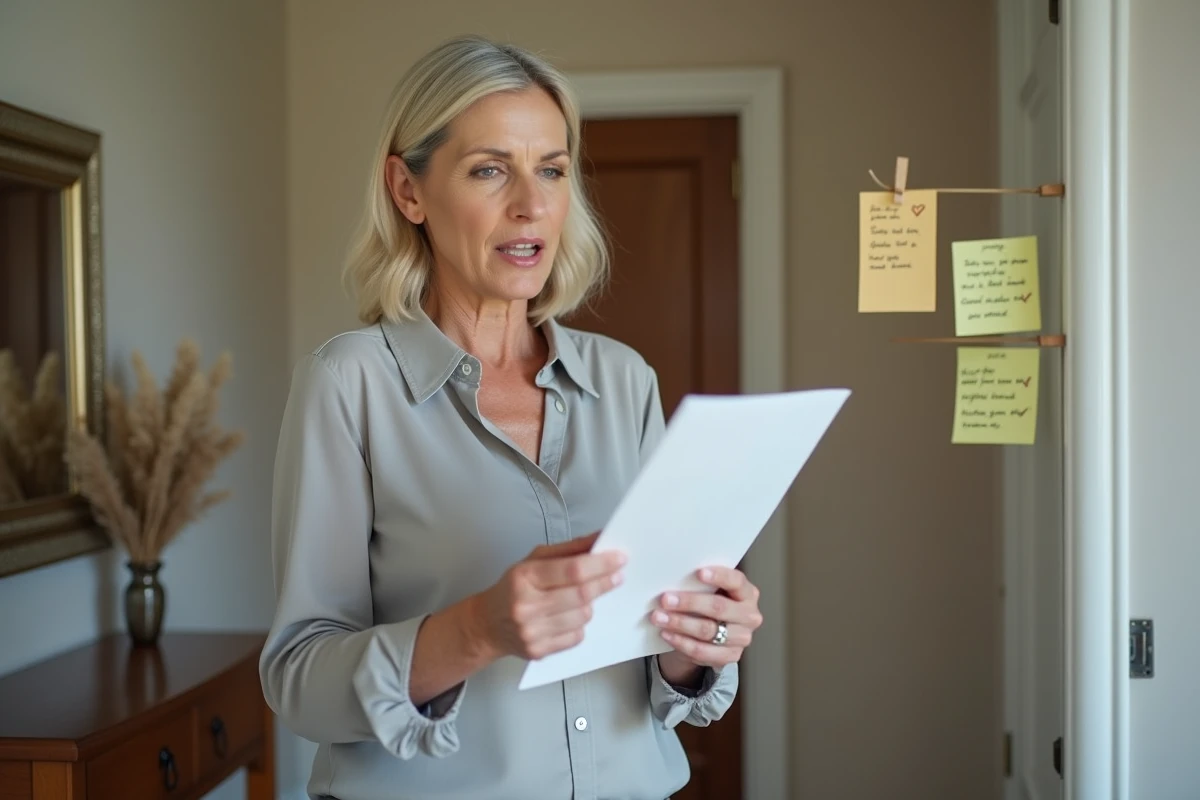
Repetition serves not only to memorize the text. It helps to master the pace, to spot the passages where emotion might overwhelm you, and to adjust the actual duration.
Practicing in front of a trusted loved one adds valuable external feedback. This person can point out a passage that is too long, a joke that falls flat, or a moment when you speak too quickly.
8. Keep a paper version of the speech on the day of the ceremony
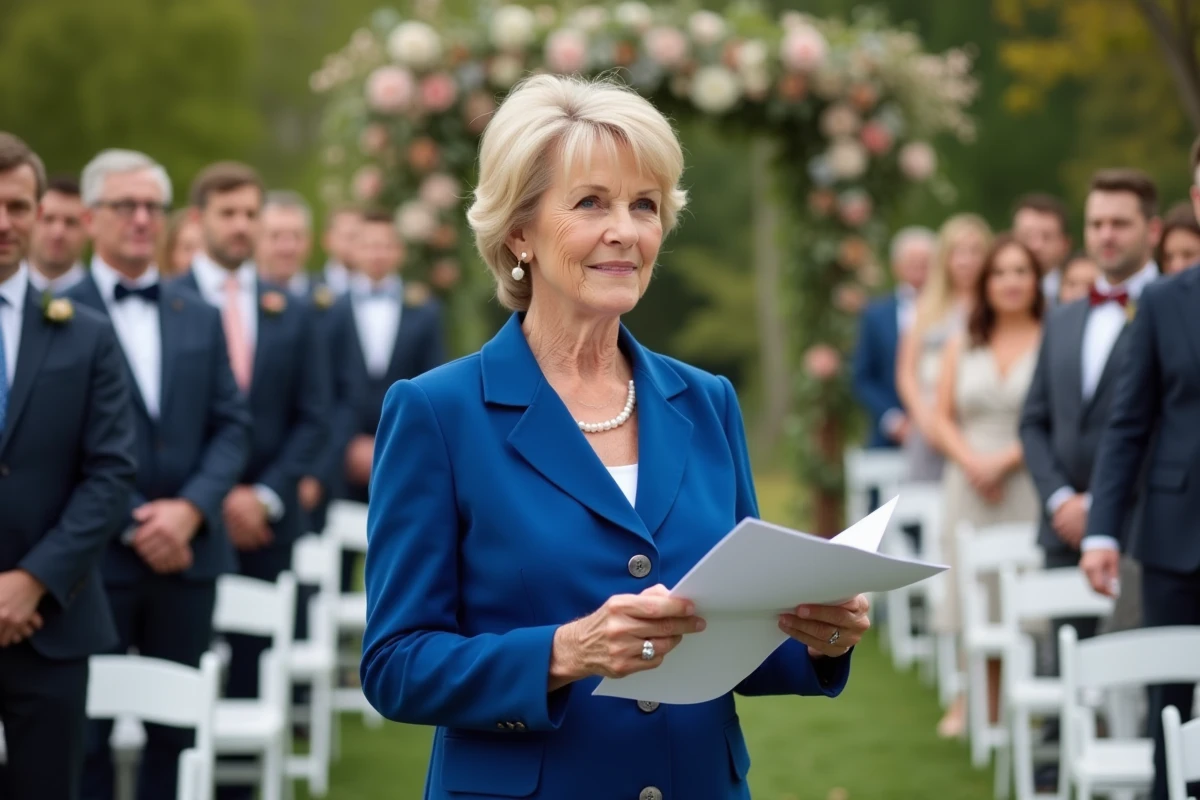
Even if you know your text by heart, the stress and emotion of the day can cause memory lapses. Having a printed or handwritten version with you is not a sign of weakness; it’s a safety measure.
Note keywords in the margins to help you regain your thread if you lose it. Use a readable font and generous line spacing if you print the text.
9. Avoid generic quotes about love and marriage
“Love knows no age” or “marriage is the triumph of imagination over intelligence”: these phrases circulate in most wedding speeches. They add nothing personal.
A groom’s mother’s speech draws its strength from authenticity, not quotes. If you want to include a literary excerpt, choose a passage that resonates with your specific family story, not an interchangeable phrase from one wedding to another.
10. Conclude the speech with a message looking towards the couple’s future
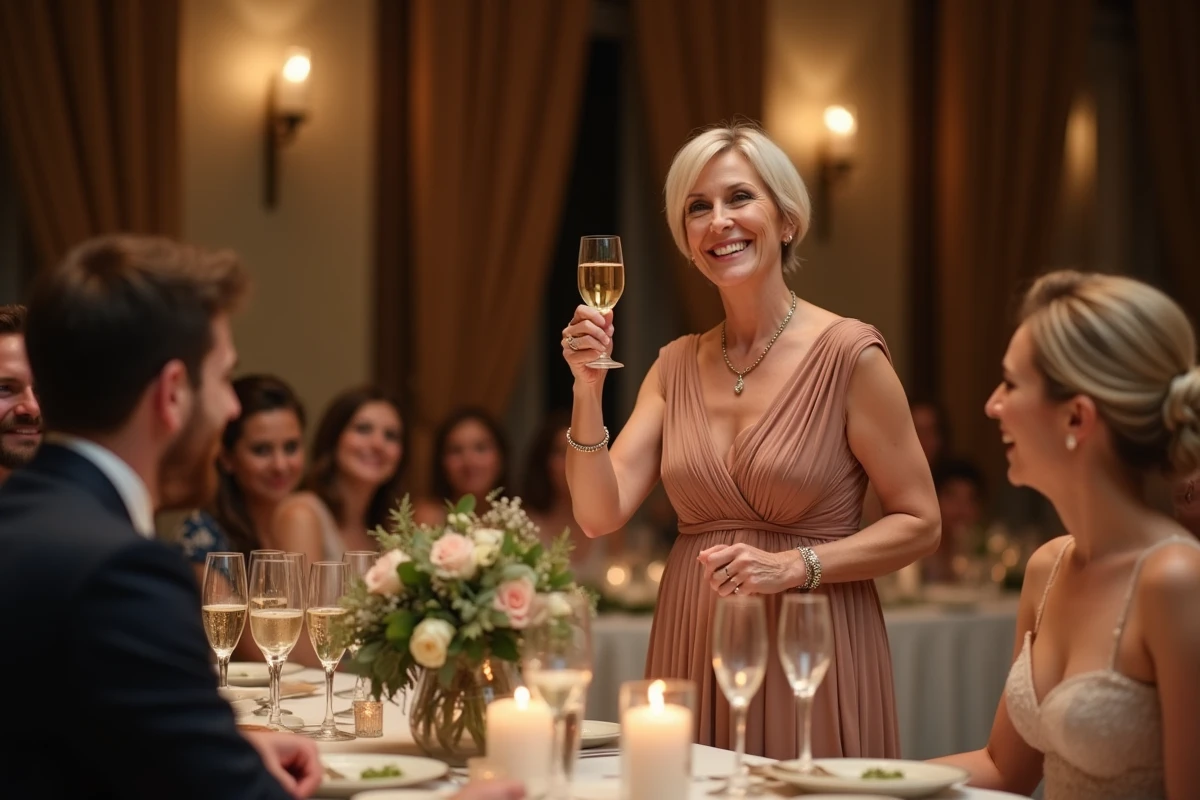
The end of the speech is the moment the assembly remembers. A concrete wish addressed to the couple works better than a “I wish you all the happiness in the world” already heard ten times that day.
Formulate a wish related to what you know about them: a shared project, a shared trait, a place they love. Then raise your glass. The best closure is one that makes people want to applaud, not cry.
Every secular ceremony is unique, and the groom’s mother’s speech is just as unique. What makes the difference is neither eloquence nor length, but the accuracy of the message in relation to the real relationship with her son and the couple he forms.