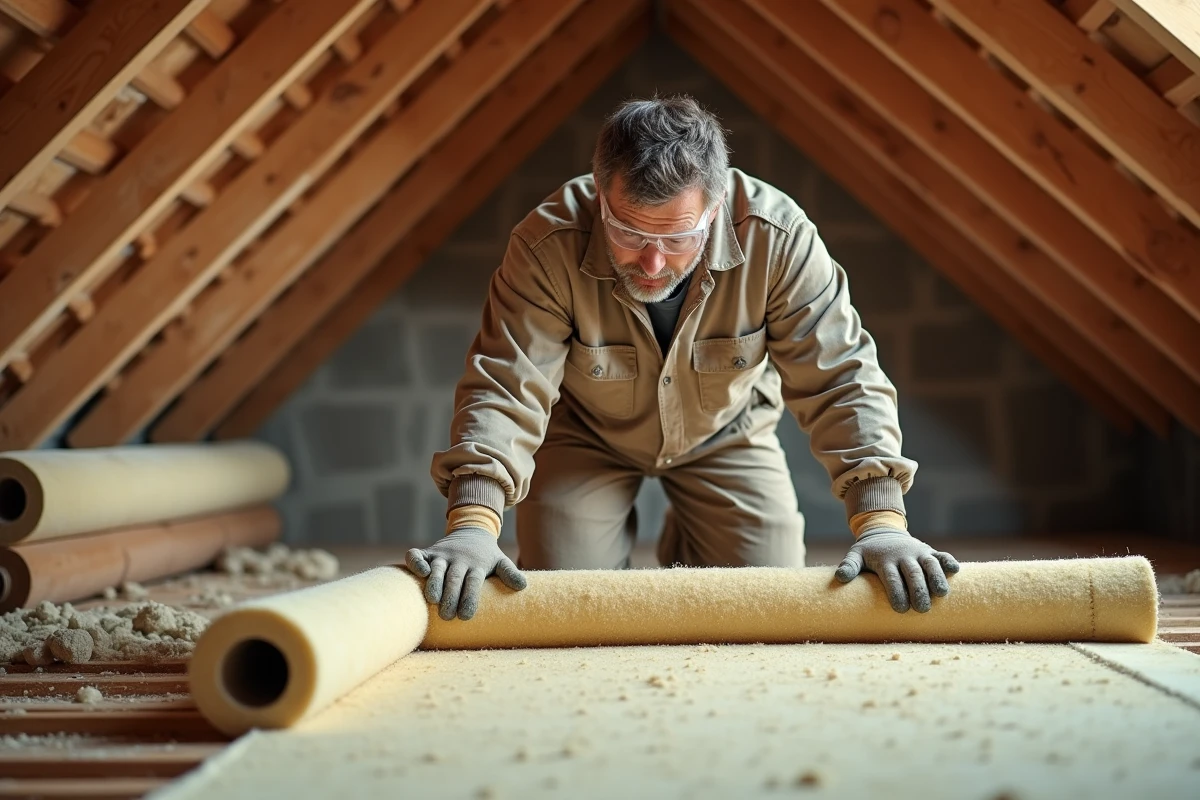
Roof insulation involves the heaviest decisions in an energy renovation project. Target thermal resistance, choice of insulation material, moisture management: each parameter affects the final result on both the bill and summer comfort. Comparing these parameters with precise data allows for sizing the project without overspending or underperformance.
Thermal resistance and thickness: comparative table of common roof insulations
The choice of insulation for the roof primarily depends on its thermal conductivity (lambda), which determines the necessary thickness to achieve a given thermal resistance. The lower the lambda, the less material is needed to achieve the same performance.
| Insulation | Average Lambda (W/m.K) | Indicative Thickness for R ≈ 6 m².K/W | Density |
|---|---|---|---|
| Glass wool | 0.032 – 0.040 | 24 – 26 cm | Low |
| Rock wool | 0.034 – 0.040 | 24 – 28 cm | Medium |
| Cellulose wadding | 0.038 – 0.042 | 26 – 30 cm | Medium |
| Polyurethane panels | 0.022 – 0.028 | 14 – 18 cm | Low |
| Wood fiber | 0.038 – 0.043 | 26 – 30 cm | High |
Polyurethane panels have the lowest lambda and reduce the total thickness of insulation. In contrast, wood fiber or cellulose wadding offer a significantly higher thermal lag, a direct advantage in limiting summer overheating in attics.
Knowing how to properly insulate your roof involves cross-referencing this data with the actual configuration of the roof: slope, available height under the rafters, presence of traditional or industrial framing. A thin yet efficient insulation is suitable when space is constrained, while a thicker bio-based material is justified if the volume under the roof allows it and summer comfort is as important as winter performance.
Vapor barrier and air tightness: mistakes that ruin thermal performance
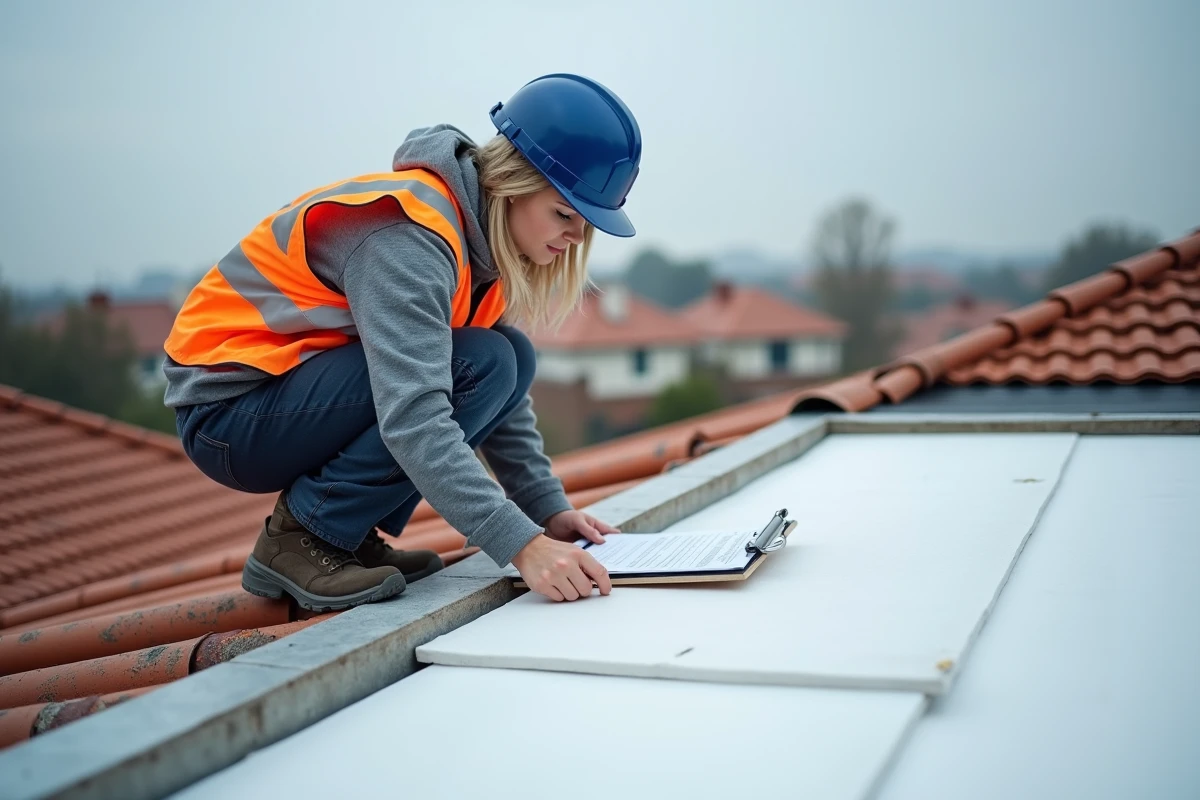
Installing quality insulation without properly addressing the vapor barrier is like insulating a wall while leaving the window open. The vapor barrier is placed on the warm side (interior) and prevents moisture produced in the home from migrating into the insulation, where it would condense and degrade thermal resistance.
The three most common defects on site
- Unsealed joints between vapor barrier sheets: every centimeter of leakage reduces overall air tightness and creates a localized condensation bridge.
- Passage of electrical conduits or ducts through the vapor barrier without a sealing sleeve: these penetrations, often overlooked, account for a significant portion of air leaks measured during blower door tests.
- Vapor barrier installed on the wrong side in sarking configurations: in external insulation, the under-roof screen must be highly vapor-permeable (HPV) on the cold side, while the vapor retarder remains on the interior side. Reversing the membranes traps moisture in the structure.
A continuous and properly connected vapor barrier is essential for the durability of the entire insulation. Without it, glass wool or cellulose wadding accumulates water, loses its insulating power, and promotes mold growth in the framing.
Ventilated sarking: the answer to summer overheating in roof insulation
Most roof insulation guides focus on winter heat loss. Feedback from artisan networks shows a marked increase in requests for ventilated sarking in recent years, particularly in regions exposed to heatwaves.
The principle: install rigid insulation (wood fiber, polyurethane) on the framing, then create a ventilated air gap between the insulation and the covering. Air circulates by natural convection between the entries at the bottom of the slope and the exit at the ridge.
Why the air gap makes a difference in summer
Without ventilation, the covering (tiles, slates) transmits its heat directly to the insulation, which slowly releases it back inside. With a ventilated air gap, the heating of the framing and attic significantly decreases compared to unventilated external insulation. The airflow evacuates the heat accumulated under the covering before it reaches the insulation.
This technique is more expensive than interior insulation between rafters. It is justified when the attic is converted and summer comfort is a priority, or when the framing has heritage value that one wishes to keep visible from the inside.
Global renovation and financial aid: the requirement for thermal coherence between roof, walls, and ventilation
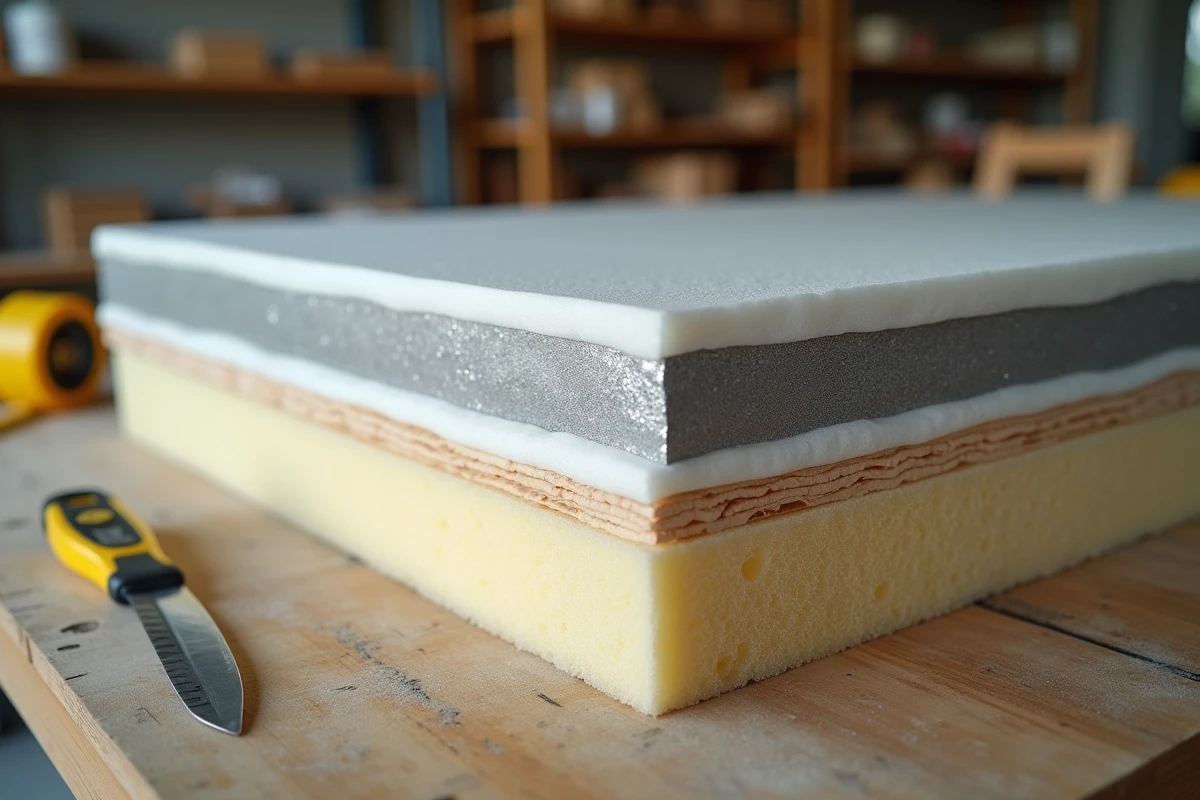
Since the update of standardized CEE operation sheets in 2024, comprehensive renovation work in residential settings requires coherence between roof insulation, wall insulation, and the ventilation system. It is no longer enough to install insulation on the roof to trigger the most significant aids.
The application must be based on a thermal study or energy audit that verifies that the overall performance of the building meets a minimum threshold. Insulating the roof without addressing ventilation, for example, can compromise the expected benefits: moisture accumulates in the building made more airtight, and uninsulated walls remain major points of heat loss.
This regulatory framework changes the way roof insulation work is planned. Before choosing a material or thickness, it is essential to know whether the project is part of a comprehensive renovation (with financial bonuses conditioned on the coherence of the package) or a standalone intervention on the roof alone.
The key data to consider for sizing a roof insulation project remains the target thermal resistance, cross-referenced with summer comfort and the coherence of the building. Poorly installed or poorly integrated efficient insulation in an incoherent envelope will not yield the expected savings. The choice of technique (interior, sarking, lost attics) arises from these constraints, not the other way around.