Supporting an elderly parent requires time, energy, and an organization that most families build gradually, without a defined framework. The result is often the same: one person bears the majority of the burden, while other members remain on the sidelines due to a lack of coordination, and the elderly relative senses the tension without being able to alleviate it.
Strengthening family ties around an elder is not just about increasing visits. It involves distributing roles, identifying professional support, and acknowledging that certain tasks do not fall within the family’s responsibilities.
AGGIR Grid and Institutional Support: Diagnosing Before Acting
The first mistake is to react in urgency, after a fall or hospitalization, without having assessed the level of loss of autonomy. The AGGIR grid allows for this evaluation: it classifies dependency into six groups (GIR 1 to 6) and conditions access to the APA, the personalized autonomy allowance.
Having your relative evaluated by the medical-social team of the departmental council is not just an administrative formality. It is the starting point for structured support. As long as this step is not completed, the family navigates blindly, between overestimating needs (which generates anxiety) and underestimating them (which delays necessary adjustments).
Several structures can then take over: the CLIC (local information and coordination center), the CCAS of the municipality, or hospital services after discharge. These organizations direct towards home help, nursing care, or respite services. Families wishing to learn more about Happy Seniors will find additional resources to structure this process.

Distributing the Burden Among Family Caregivers Without Reproducing the Same Patterns
The available data on the profile of caregivers converge on one point: the primary caregiver is mostly a woman, whether it is the wife, daughter, or daughter-in-law. This gender distribution is not a deliberate choice. It results from family dynamics that are rarely verbalized, where the presumed availability serves as a designation.
Organizing family support begins with a concrete inventory of tasks. Not all tasks require the same geographical proximity or skills.
- Medical coordination (making appointments, monitoring treatments, liaising with the primary doctor) can be managed remotely by an organized family member, even if they are geographically distant.
- Shopping, meal preparation, or home maintenance can be shared among several participants, including home help professionals funded by the APA.
- Emotional support (regular calls, visits, outings) benefits from being distributed among several people to prevent the emotional bond from becoming entangled with logistical burdens.
Anticipating tensions among family members also involves regular exchanges, not only about the health status of the elderly relative but also about each person’s fatigue. An exhausted caregiver eventually isolates themselves, which weakens the entire chain of solidarity.
Adapting the Home: A Concrete Lever to Maintain Autonomy
Staying at home remains the most frequently expressed wish by elderly people. For this choice to be sustainable, the physical environment must adapt to the evolution of capacities.
The most effective adjustments are often simple: grab bars in the bathroom, removal of rugs and door thresholds, enhanced lighting in hallways, installation of a walk-in shower. The MaPrimeAdapt’ program finances part of these works for owner-occupants and certain tenants, in addition to the APA.
Teleassistance is another tool often underestimated by families. It does not replace human presence, but it reduces the response time in case of a fall or malaise, especially at night. For the elderly person, wearing a pendant or a connected bracelet also represents an acceptable compromise between safety and autonomy.
Intergenerational Cohabitation: A Structured Option
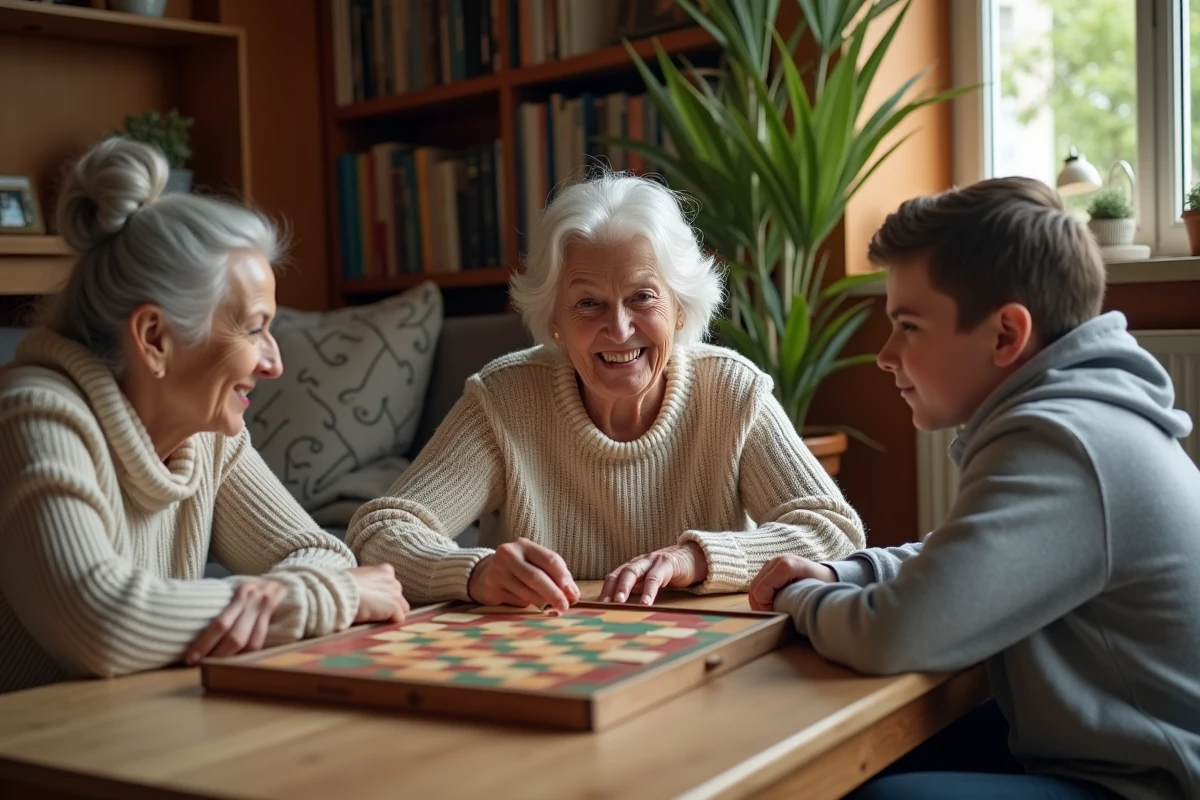
The solidarity intergenerational cohabitation contract allows a senior to share their home with a younger person, in the form of free accommodation, rental, or subletting. The framework provides for a one-month notice period in case of termination. This arrangement addresses two problems simultaneously: the isolation of the senior and the housing difficulties of the cohabitant.
Feedback from the field varies on this point: some cohabitations work sustainably, while others fail due to lack of compatibility or insufficient framing beforehand. Drafting a clear contract that specifies the expected reciprocities (evening presence, small services, sharing meals) remains the best safeguard.

Mental Burden of the Caregiver: When the Family Must Pass the Baton
Strengthening family ties does not mean that the family must bear everything. Some tasks require trained professionals, particularly hygiene care, management of cognitive disorders, or end-of-life support. Entrusting these tasks to an untrained relative exposes them to mistakes, guilt, and deterioration of the relationship.
Respite services exist: day care, temporary accommodation in nursing homes, support and respite platforms for caregivers. They allow the primary caregiver to take a break without interrupting the support for the senior.
- Respite platforms offer individual or group psychological support, often free of charge.
- Day care in specialized facilities maintains the senior’s social connection while freeing up time for the caregiver.
- Temporary accommodation, limited to a few weeks, provides a solution during vacations or unexpected family events.
Resorting to these supports is not an admission of failure. It is a condition for ensuring that family support remains sustainable in the long term, without the emotional bonds deteriorating under the weight of fatigue.
Family solidarity around an elder relies less on the quantity of presence than on the quality of organization. Objectifying needs, sharing tasks, and accepting professional support protects both the senior and their relatives. The most sustainable support is the one that does not rest on the shoulders of a single person.